
A roofing scope that accounts for your home
Residential roofing should balance curb appeal, ventilation, water management, material performance, and a scope the homeowner can understand.
High attic heat, humidity, wind-driven rain, hail, and long cooling seasons affect material aging and moisture management on Houston homes.
The repair or replacement boundary
Identify which slopes, flashings, vents and roof transitions are included. Discuss what stays in place and how any repaired area will meet the existing roof.
Decisions before materials arrive
Review the covering and color, visible accessories, underlayment and any ventilation work. Share neighborhood approval requirements or restrictions that affect your choices.
Protection and approval
Agree on access, landscaping and driveway protection, cleanup and how added decking work will be brought to you for approval.
Use the condition of your roof to guide the choice
A stain near one vent calls for a different conversation from repeated leaks across several slopes. Start with the problem you want solved, then compare repair and replacement scopes. Bring previous work records and tell us about attic moisture or interior damage you have noticed.
Roof Repair or Replacement: How to Decide →
From our project photos
From exposed decking to a shingle roof
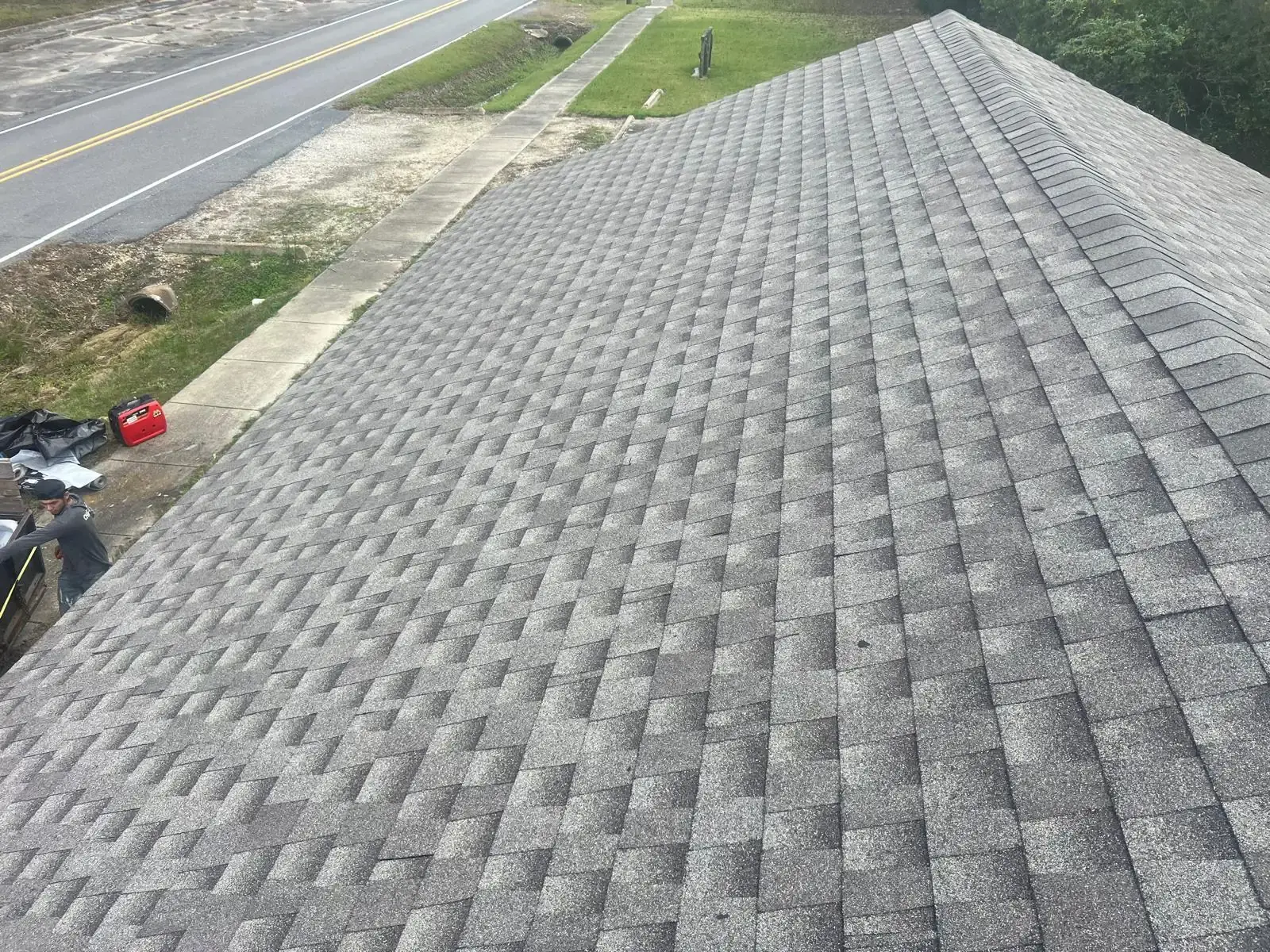
Our residential repair and reroof photographs
The pipe-vent repair shows work around a localized opening. The shingle reroof shows preparation across a larger roof area. Together they help illustrate why those estimates have different scopes.
Signs this service may be needed
- Leaks or ceiling stains
- Aging or storm-damaged shingles
- Hot or moisture-prone attic conditions
- Failing valleys, flashing, fascia, or roof accessories
Problems the assessment should address
- Shingle wear and wind damage
- Wall, chimney, and valley leaks
- Ventilation imbalance
- Drainage problems at eaves and gutters
What this service can include
- Asphalt shingles
- Standing-seam and exposed-fastener metal
- Tile roofing
- Roof ventilation
- Gutters, soffit, and fascia
- Flashing and accessory work
Plan roof work around a lived-in home
Let us know about pets, driveway use, gates and times when access is limited. Discuss where materials and debris will go, and who should receive progress updates while work is underway.
How the process works
- 01
Understand the home
Review roof geometry, attic conditions, materials, drainage, access, and the homeowner's immediate concern.
- 02
Compare practical options
Explain repair, monitoring, or replacement with material and ventilation considerations.
- 03
Protect and document
Plan site protection, complete the approved work, and record final details.
Related roofing services
Related roofing articles
Residential Roofing across Greater Houston
Find roofing information for your community and include the property address when requesting an estimate.
Explore all Greater Houston roofing service areas →
Questions property owners ask
Which roofing material works well in Houston?
The best fit depends on the home, roof pitch, budget, wind exposure, maintenance goals, and neighborhood requirements. Shingle and metal systems are common options.
Can roof ventilation reduce attic heat?
Balanced intake and exhaust ventilation can help manage attic heat and moisture, but it must be designed as a complete system.
What warranty applies to this work?
Coverage depends on the product and service. Ten-year coverage may apply to your project; the written proposal should specify the exact term, exclusions and whether the coverage is for materials or workmanship. Confirm those details for the scope you choose.