
Compare replacement estimates by the complete scope
A roof replacement is more than new surface material. The estimate should account for decking condition, underlayment, flashing, ventilation, drainage, penetrations, and the details that determine long-term performance.
Houston replacements should address heat, UV exposure, intense rainfall, wind at edges, attic moisture, and the drainage capacity of the complete assembly.
Removal and decking
Identify the roof areas being replaced, disposal arrangements and how the estimate handles decking that needs replacement after the covering comes off.
The specified assembly
Compare the proposed covering, underlayment, flashing, penetrations and ventilation or drainage work. Material names alone do not describe everything being installed.
Changes and closeout
Agree on approval for added work, the project schedule, property protection and cleanup. Request the actual product and workmanship terms that apply to the proposal.
Make alternatives comparable before choosing
Two estimates can cover the same roof and include different work. Review decking assumptions, reused components and excluded details alongside the total. If you are weighing repair against replacement, ask which observed conditions support each option and what would still need attention afterward.
What Shapes the Cost of a Roof in Houston? →
From our project photos
From exposed decking to a shingle roof
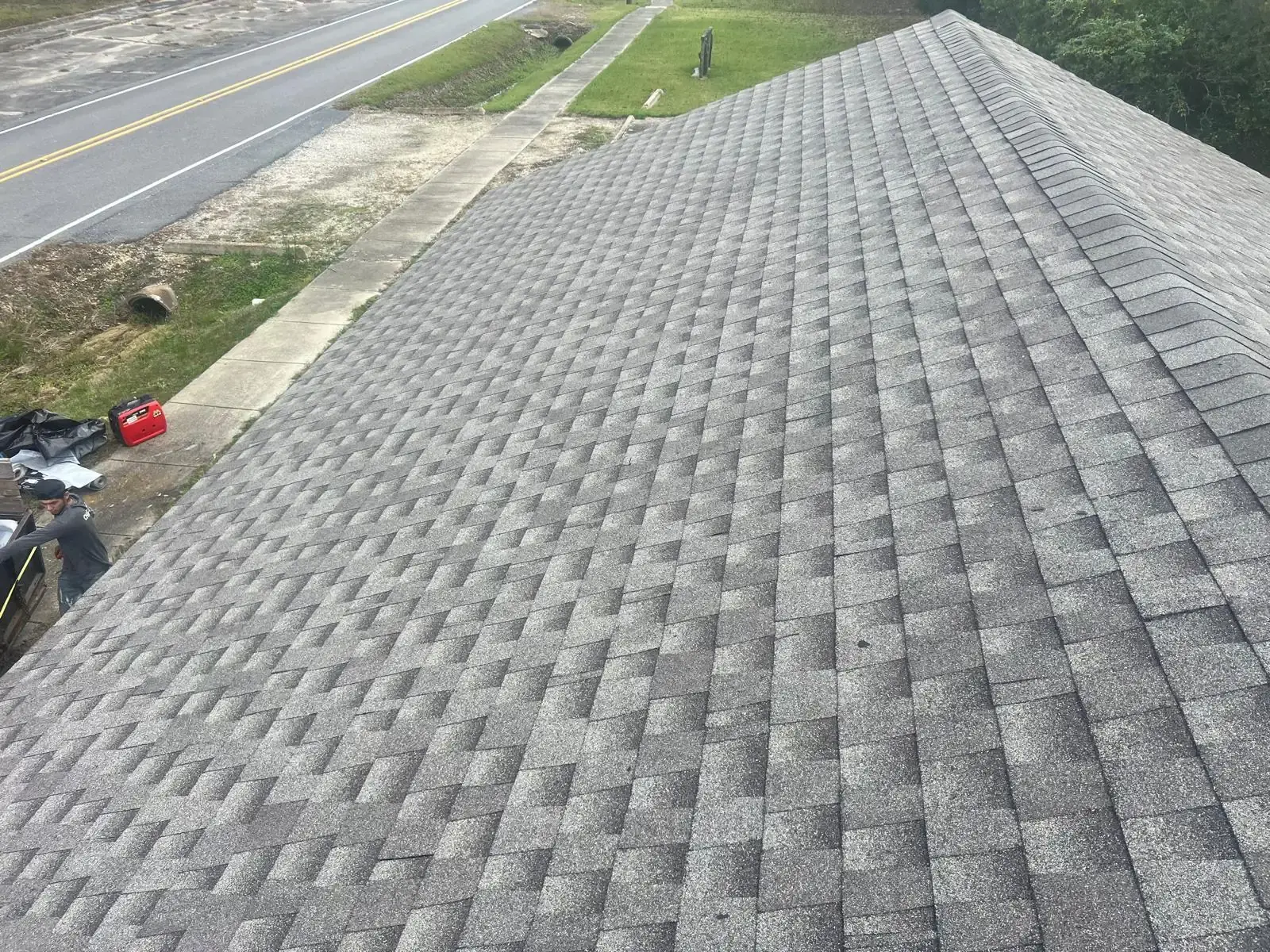
See the preparation beneath our replacement work
Our shingle reroof and metal-panel photos show preparation and underlayment as well as the finished covering. Use these stages to discuss what your replacement proposal includes.
Signs this service may be needed
- Recurring leaks across multiple areas
- Brittle, cracked, or extensively missing materials
- Widespread storm damage
- A roof approaching the end of its expected service life
Problems the assessment should address
- Deteriorated decking
- Outdated flashing details
- Unbalanced ventilation
- Low-slope drainage or saturated insulation concerns
What this service can include
- Tear-off and disposal
- Decking inspection
- Underlayment and flashing
- Ventilation review
- Shingle, metal, tile, and low-slope systems
- Final cleanup and walkthrough
Coordinate deliveries, removal and daily use
Discuss parking, material staging, pets, landscaping and access to the home. On a commercial building, include delivery routes, tenant entrances, rooftop equipment access and any working-hour restrictions in the planning conversation.
How the process works
- 01
Measure and inspect
Document roof geometry, access, materials, penetrations, ventilation, and visible substrate concerns.
- 02
Build the system scope
Specify removal, decking allowances, water-control layers, flashing, ventilation, and finish materials.
- 03
Install and close out
Protect the site, complete the approved system, clean the property, and document the finished work.
Related roofing services
Related roofing articles
Roof Replacement across Greater Houston
Find roofing information for your community and include the property address when requesting an estimate.
Explore all Greater Houston roofing service areas →
Questions property owners ask
How do I know when replacement makes more sense than repair?
Widespread wear, recurring leaks, brittle materials, storm damage across multiple slopes, or a roof near the end of its service life can make replacement the better long-term value.
How long does a roof replacement take?
Timing depends on size, roof complexity, material, weather, and any decking repairs discovered after tear-off. A clear project schedule should be included before work begins.
What warranty applies to this work?
Coverage depends on the product and service. Ten-year coverage may apply to your project; the written proposal should specify the exact term, exclusions and whether the coverage is for materials or workmanship. Confirm those details for the scope you choose.