
What a commercial roof proposal should make clear
Commercial roofing requires careful attention to drainage, penetrations, equipment curbs, access, tenant impact, phasing, and long-term maintenance planning.
Sun, thermal movement, intense rain, humidity, wind, and frequent rooftop HVAC work can accelerate failures at seams, curbs, edges, and drains.
Roof zones and existing conditions
Identify the material and work area, known leaks, drainage points and equipment penetrations. Explain any further investigation needed before a coating or replacement scope can be finalized.
Preparation and system details
Compare surface preparation, seams, fasteners, flashings, curbs and perimeter work. Ask for the proposed products and application requirements in writing.
Operations and closeout
Document phasing, deliveries, access, tenant communications and equipment coordination. Include the agreed completion record and maintenance information in the scope.
Compare repair, coating and replacement separately
A coating proposal and a replacement proposal are different scopes. Ask what the existing condition supports, what preparation or repairs are included, and what the proposed work leaves in place. Review those differences with the building's maintenance history and operational needs.
Commercial Roof Inspection Checklist for Property Teams →
From our project photos
Coating a flat roof around rooftop equipment
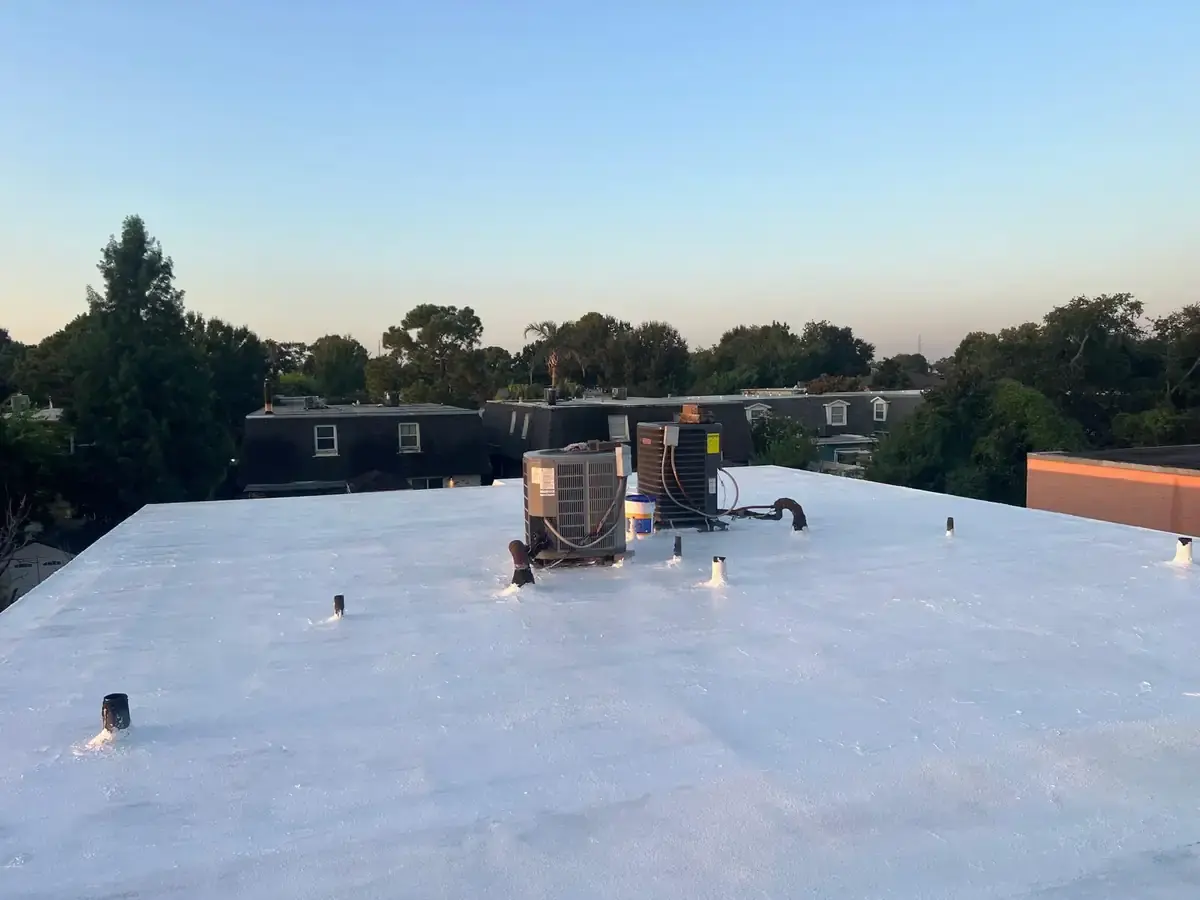
Our coating work around rooftop equipment
Our low-slope and metal-roof photo sets show coating work around equipment, seams and fasteners. The preparation views provide something concrete to discuss alongside a proposed system and written scope.
Signs this service may be needed
- Recurring leaks near curbs or penetrations
- Open seams, punctures, or coating wear
- Ponding or restricted drainage
- Increasing repair frequency across multiple roof zones
Problems the assessment should address
- Membrane and seam failures
- Metal movement or fastener issues
- Drain, scupper, and overflow restrictions
- Damage from rooftop traffic or equipment work
What this service can include
- TPO and PVC systems
- Modified bitumen
- Metal roofing
- Roof coatings
- Leak investigation
- Maintenance plans and reporting
Bring the people who operate the building into planning
Identify the facility contact, roof-access arrangements, delivery restrictions and tenant hours. Coordinate rooftop HVAC access and any sensitive interior areas before scheduling. If the property has several roof zones, ask how work and updates will be organized by area.
How the process works
- 01
Map the operating roof
Review roof zones, drainage, penetrations, equipment, access, tenants, leak history, and existing records.
- 02
Prioritize by risk
Separate active defects, preventive maintenance, restoration opportunities, and capital replacement.
- 03
Coordinate the work
Plan safety, access, deliveries, weather, phasing, and closeout around building operations.
Related roofing services
Related roofing articles
Commercial Roofing across Greater Houston
Find roofing information for your community and include the property address when requesting an estimate.
Explore all Greater Houston roofing service areas →
Questions property owners ask
Can commercial roof work be phased around operations?
Many projects can be planned in phases to reduce disruption. Access, safety, weather, deliveries, and tenant needs should be addressed before work begins.
When is a coating appropriate?
A coating may extend the service life of a compatible roof in suitable condition. It is not a substitute for correcting saturated insulation, structural issues, or failed substrates.
What warranty applies to this work?
Coverage depends on the product and service. Ten-year coverage may apply to your project; the written proposal should specify the exact term, exclusions and whether the coverage is for materials or workmanship. Confirm those details for the scope you choose.