
A roofing plan that starts with your property.
Fulshear properties often feature larger homes, steep pitches, multiple valleys, dormers, masonry transitions, metal accents, and outdoor-living additions. These architectural details create a distinctive appearance, but they also create more places where water must be directed correctly.
Local buildings, roof systems, and weather
Complex residential roofs need careful flashing at walls, crickets, chimneys, penetrations, valleys, and material transitions. Acreage and commercial properties may add exposed-fastener metal, standing-seam systems, or low-slope sections that require different inspection methods.
Common Fulshear roofing needs
- Fulshear roof repair and leak tracing
- Complex flashing and valley work
- Premium shingle and metal options
- Preventive inspection for large roof systems
A Fulshear roof replacement should preserve drainage intent across the entire roofline. Material selection matters, but transition details and field execution often decide long-term performance.
Roof repair in Fulshear
Complex rooflines require tracing how several planes feed valleys, chimneys and lower sections. On a Fulshear home with steep slopes or metal accents, a surface patch near an interior stain may miss an opening at a higher wall or material transition.
For your inspection: Ask for wide photos that show the roof geometry as well as close-ups of the suspected defect. A repair explanation should identify where water enters and where it should drain.
Residential roofing in Fulshear
Residential reroofing should count the details that concentrate labor: dormers, chimneys, crickets, walls, valleys and mixed materials. A replacement plan also needs to protect masonry, landscaping and outdoor living areas while keeping drainage continuous across the entire roofline.
For your home: Compare estimates using the same detail list. Confirm which flashings will be rebuilt and how metal accents will connect to the main covering.
Commercial roofing in Fulshear
For retail, office or acreage business properties, identify whether the roof is a membrane, standing-seam system or exposed-fastener metal before choosing a repair. Movement, penetrations and drainage differ between those assemblies, even when their finished surfaces look similar from the ground.
For your property: Share the building use, roof material and access conditions. Ask the inspection to separate each roof type and clarify any constraints around occupied areas.
Examples of our work
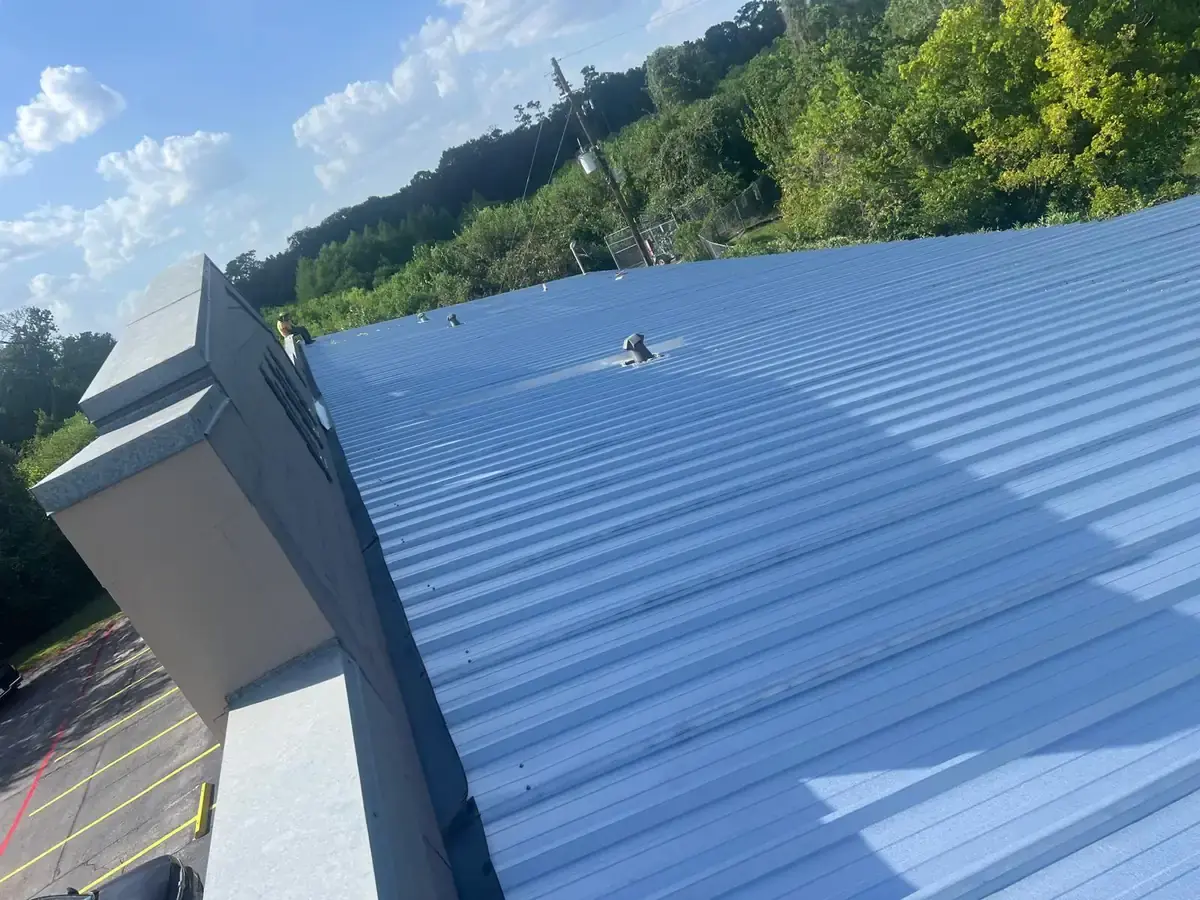
From underlayment to metal roof panels
Vents and wall transitions in this installation example provide a useful starting point for discussing metal sections and the preparation beneath them.
More roofing services available in Fulshear
When the issue involves storm damage, a full reroof or a material decision, these service guides explain the next steps.
What goes into a Fulshear roofing estimate?
The scope depends on the roof size, slope, material, access, and condition of the existing system. An isolated flashing repair and a complete replacement require different inspections and budgets.
- Identify the leak, storm damage, or signs of wear.
- Review flashing, drainage, penetrations, and accessible decking.
- Discuss material choices, site protection, and scheduling.
- Explain the proposed work and how hidden damage would be handled.
Guides for planning your roofing project
More roofing guidance for Fulshear
Questions Fulshear property owners ask
Why are complex rooflines more difficult to diagnose?
They create more intersections and water paths. A stain can originate above or beside the visible location, so the inspection must trace roof geometry rather than focus only on the interior mark.
Can metal accents be coordinated with a shingle roof?
Yes, when transitions, underlayment, fasteners, finishes, and drainage are detailed as a compatible system.