
A roofing plan that starts with your property.
Richmond includes historic-area construction, established subdivisions, rapid residential growth, acreage properties, shops, offices, and light-commercial buildings. Complex additions and roof transitions deserve particular attention because leak sources frequently develop where roof ages, pitches, or materials change.
Local buildings, roof systems, and weather
Homes may combine steep slopes, dormers, masonry walls, metal accents, and patio additions. Commercial properties may have parapets, internal drains, rooftop equipment, or mixed membrane and metal sections that require coordinated detailing.
Common Richmond roofing needs
- Richmond roof inspection and leak investigation
- Residential roof replacement
- Metal and low-slope roofing
- Flashing at additions and wall transitions
Richmond roof replacement planning should account for tear-off findings, ventilation balance, flashing at masonry and siding, drainage, and the compatibility of all roof accessories with the selected material.
Roof repair in Richmond
Where a Richmond home has been extended, a leak may begin at the junction between roof ages, pitches or materials. Inspect the full transition, including the wall above it and drainage from the higher roof, before deciding whether the visible covering is the failed component.
For your inspection: Provide the timing of additions and previous repairs where known. Mark the interior stain and describe whether it appeared after building work or a particular rain event.
Residential roofing in Richmond
Homes with dormers, masonry walls, metal accents and patio tie-ins need a replacement scope that names each transition. Shingle and metal options should be compared as complete assemblies, including underlayment, ventilation, flashing, accessory compatibility and future maintenance.
For your home: Ask how the proposed system connects to roof sections that will remain. Make sure a material comparison includes the same removal, preparation and flashing work.
Commercial roofing in Richmond
Commercial properties with parapets, internal drains or mixed roof sections benefit from a diagram of each material and outlet. A leak near a wall may involve coping or flashing above the membrane, while water inside the assembly can appear away from its entry point.
For your property: Share recurring leak locations and recent equipment or wall work. Ask the scope to distinguish roof repairs from any separate wall or drainage design work.
Examples of our work
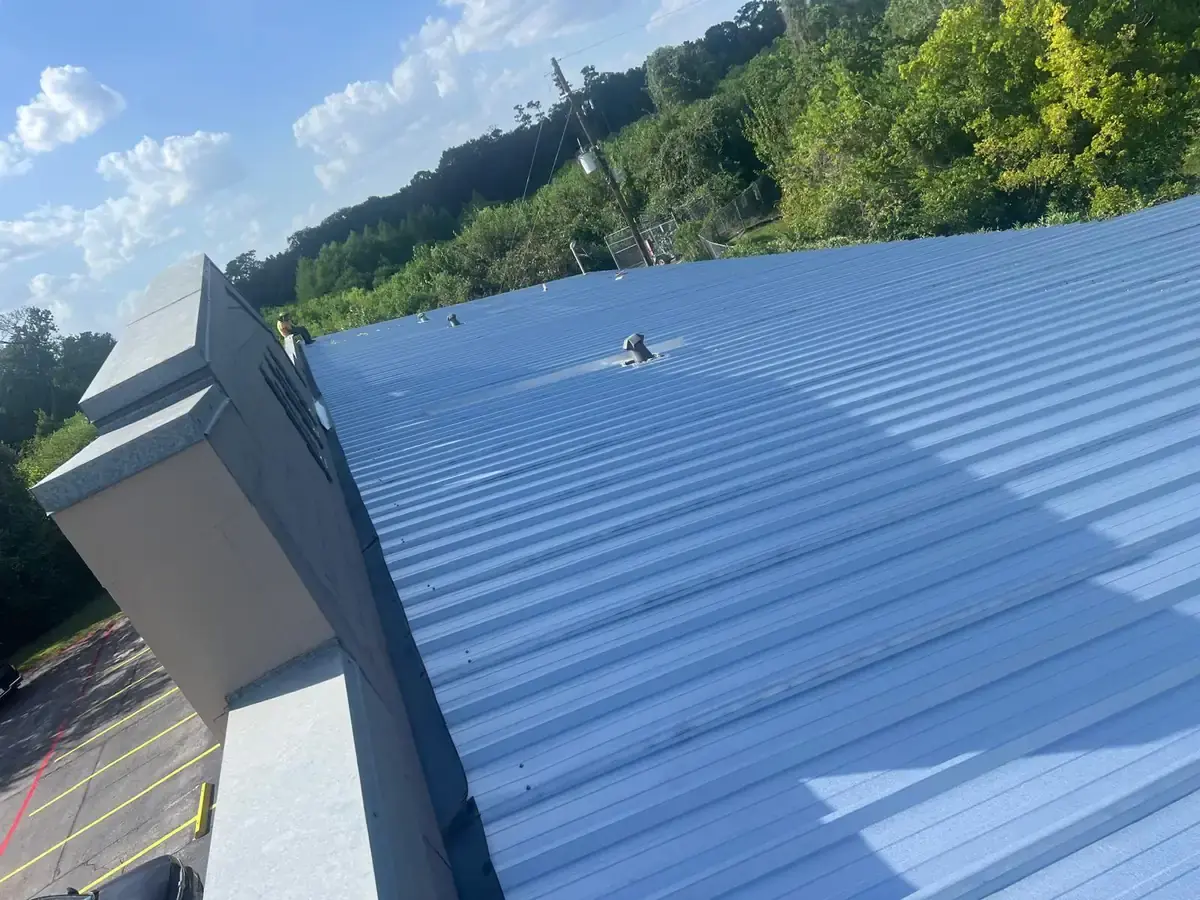
From underlayment to metal roof panels
Underlayment, vent penetrations and raised walls are visible in this metal-roof example, useful details when comparing how different roof coverings connect to a building.
More roofing services available in Richmond
When the issue involves storm damage, a full reroof or a material decision, these service guides explain the next steps.
What goes into a Richmond roofing estimate?
The scope depends on the roof size, slope, material, access, and condition of the existing system. An isolated flashing repair and a complete replacement require different inspections and budgets.
- Identify the leak, storm damage, or signs of wear.
- Review flashing, drainage, penetrations, and accessible decking.
- Discuss material choices, site protection, and scheduling.
- Explain the proposed work and how hidden damage would be handled.
Guides for planning your roofing project
More roofing guidance for Richmond
Questions Richmond property owners ask
How can I prepare for a Richmond roof inspection?
Note where and when water appeared, gather prior repair information if available, provide attic access, and identify any recent storm or tree-impact event.
Can additions create recurring roof leaks?
They can when transitions, pitch changes, drainage, or flashing were not integrated correctly. The inspection should consider the entire water path around the addition.