
A roofing plan that starts with your property.
Pearland’s position southeast of central Houston brings heat, humidity, heavy rain, and storm exposure into nearly every roofing conversation. Homes, medical offices, retail buildings, warehouses, and community properties each manage moisture differently, so inspection findings should be specific to the building.
Local buildings, roof systems, and weather
Residential concerns often include attic ventilation, wind-driven rain at flashing, sealant aging, and drainage around additions. Commercial roofs need close attention at drains, scuppers, penetrations, edge conditions, seams, and any area where water remains after rainfall.
Common Pearland roofing needs
- Pearland roof leak repair
- Moisture and ventilation review
- Storm-damage inspection
- Commercial low-slope drainage and maintenance
A Pearland roof repair should address both the entry point and the condition that allowed water to reach it. Repeated surface sealing is rarely a durable substitute for correcting failed flashing or drainage.
Roof repair in Pearland
For intermittent leaks, compare rain direction and duration with attic moisture and drainage observations. A Pearland roof may admit wind-driven water at a wall or vent while slow runoff exposes a different defect at a valley, seam or low area.
For your inspection: Keep a brief leak log rather than relying on one dry-day photograph. Note how long water remains after rain and whether the same interior location becomes damp in dry weather.
Residential roofing in Pearland
Residential repair and replacement should address roof-to-wall flashing, attic airflow and runoff around additions together. Choosing a new covering will not by itself correct every condensation or duct problem; the inspection should identify the evidence for each recommended scope.
For your home: Gather earlier roof and attic work records. Ask which parts of a moisture problem are roofing work and whether another trade needs to assess a separate source.
Commercial roofing in Pearland
For medical offices, retail and other commercial buildings, map drains, scuppers, curbs and low areas during a condition assessment. Repeated ponding and leaks near equipment need a diagnosis of the surrounding assembly before deciding on a patch, coating or replacement.
For your property: Provide photographs taken after rainfall where safely available. Distinguish clearing a blocked outlet from changes to slope or drainage capacity that may need design review.
Examples of our work
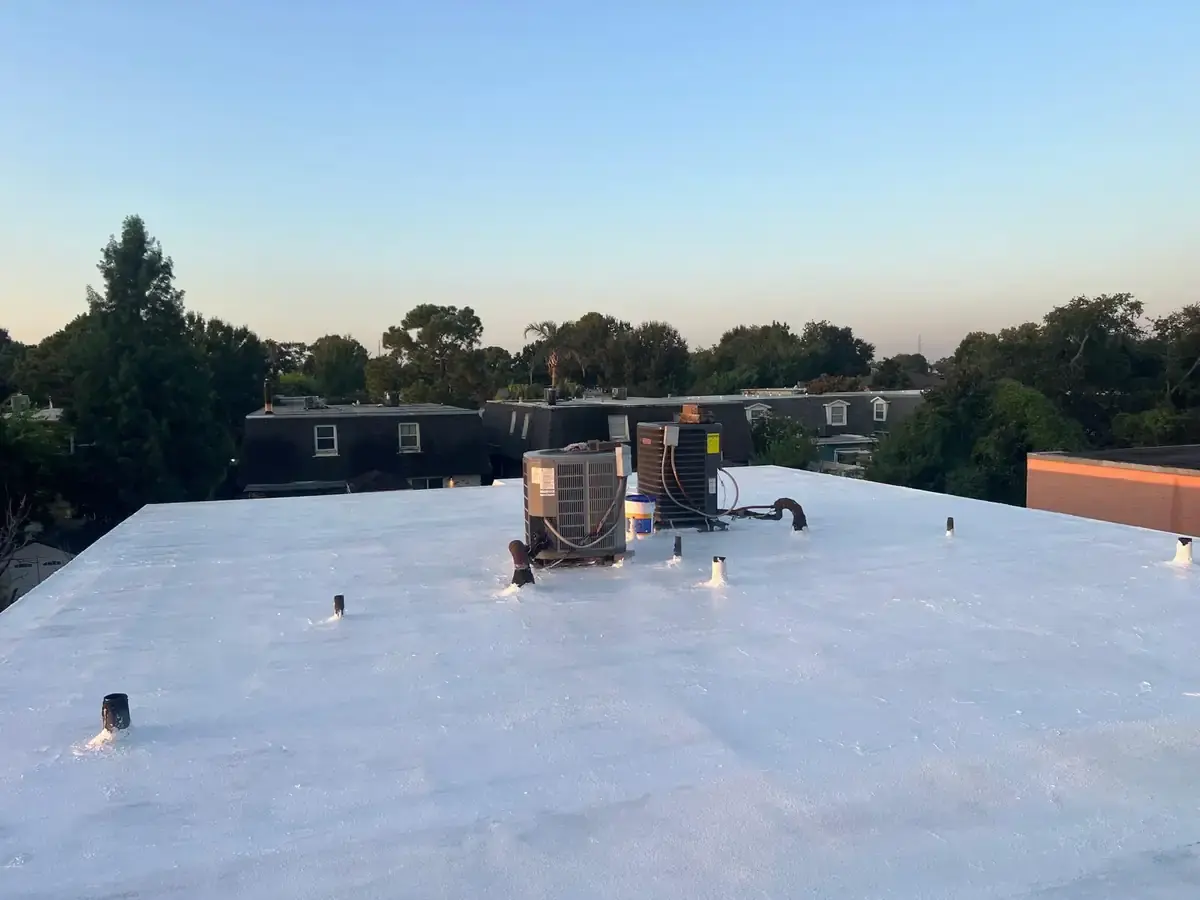
Coating a flat roof around rooftop equipment
This low-slope example illustrates the equipment and penetration details that belong in a coating discussion. Suitability still depends on the condition and drainage of the roof being assessed.
More roofing services available in Pearland
When the issue involves storm damage, a full reroof or a material decision, these service guides explain the next steps.
What goes into a Pearland roofing estimate?
The scope depends on the roof size, slope, material, access, and condition of the existing system. An isolated flashing repair and a complete replacement require different inspections and budgets.
- Identify the leak, storm damage, or signs of wear.
- Review flashing, drainage, penetrations, and accessible decking.
- Discuss material choices, site protection, and scheduling.
- Explain the proposed work and how hidden damage would be handled.
Guides for planning your roofing project
More roofing guidance for Pearland
Questions Pearland property owners ask
Does high humidity cause roof leaks?
Humidity alone is not usually the leak source, but it can complicate attic moisture and make ventilation or condensation problems look similar to exterior water entry.
Why inspect a commercial roof after heavy rain?
A post-rain review can reveal slow drainage, active ponding, displaced components, and moisture paths that are less obvious when the roof is completely dry.